
Against Healing

Must we always be healing? When I left my solitary underground psychedelic experiences for group ceremonies, language was the first clue that I had entered a different subculture. I had never heard any of these expressions—purge (in a non-political sense), medicine (instead of drug), holding space (wait, what?), container, parts work. There was no talk of “safe containers” or “holding space” in my world of faculty meetings, classrooms, and conferences (for better or worse.) I was now, instead, in the culture of psychedelic healing.
Indeed, healing, to me, was the most bothersome word-concept. Healing is a go-to metaphor for…what, exactly? I hear it not just in the obvious spaces of psychedelic-assisted-therapy, but in psychedelic churches and temples, psychedelic meditation spaces, and myriad underground practices. For those seeking intentional, non-recreational, psychedelic communities, it’s hard to escape healing-centric language.
The title of this post, a provocation, reflects my lonely dissent from how medicalized-therapeutic culture dominates so many corners of this psychedelic reemergence, even among people, like some in my multiple communities, who also criticize the medicalization of psychedelics. Moreover, the language and frameworks of healing and medicine extend beyond specific ceremonies with psychoactive substances, so that we are always, everywhere, doing the work of healing.
This makes sense—the pressure to heal dominates our culture and has shaped us for decades. Over the course of the twentieth century, the discourses of medicine and psychotherapy have expanded into the far reaches of our everyday lives and into the recesses of our souls. Offshoots of medicalization (even when they present as alternatives to western medicine) are the related worlds of New Ageism, wellness culture, enhancement culture, the optimization and longevity movements, and self-help. Capitalism turbo-charged these forces—these is always something to buy and sell for healing.
Non-recreational psychedelic subcultures have some degree of overlap with these varied worlds of healing. (In addition, culturally sensitive psychedelic practitioners evoke various indigenous cultures’ work with psychoactive plants, although indigenous healing practices/meanings do not seamlessly generalize to our heavily medicalized-therapeutic western culture. Their “healing” is not necessarily our “healing.”)
Medicalization spawned new institutions, types of knowledge, diagnostic classifications, and ways of thinking and talking about ourselves. In addition, the mid-century “triumph of the therapeutic” created a therapeutic culture in which, as sociologist Eva Illouz notes, “those who did not conform to these psychological ideals of self-fulfillment were now sick.” Non-conforming and troublesome behaviors and feelings became diseases and disorders. An emotional culture that constructs the self in therapeutic terms became increasingly mainstream. Healing, then, is in the cultural air that we breathe. It wasn’t always this way.

Some background. The sociology department at Brandeis University, where I received my doctorate, was a locus of pioneering critiques of the growing medicalization of society. Irving Zola and Peter Conrad, both members of my dissertation committee, were towering figures in this critical scholarship. It was a different era. The medicalization of women’s lives, older people’s experiences, diverse sexualities, any of us with challenging emotional complexities (pretty much all of us, right?), was underway but not so fully accomplished as it is now.
Medicalization critiques came from the left, among them the feminist and Black women’s health movements, the mental patients’ liberation front, lesbian and gay liberation, disabilities rights activists, the Black Panthers, the Gray Panthers. We were living through the encroachment of medical discourses into society, culture, and our emotional beings.
We directly experienced the impact of medicalization. Women’s bodies and emotions were pathologized or ignored altogether. Queer people had been institutionalized and socially banished as deviants. Pharmaceutical companies advertised new anti-psychotic medications as a supposed cure for the fierce political anger of women and African Americans. Moreover, they were launching the new generation of psychiatric anti-anxiety and depression medications. We soon became, as the book title at the time put it, prozac nation.
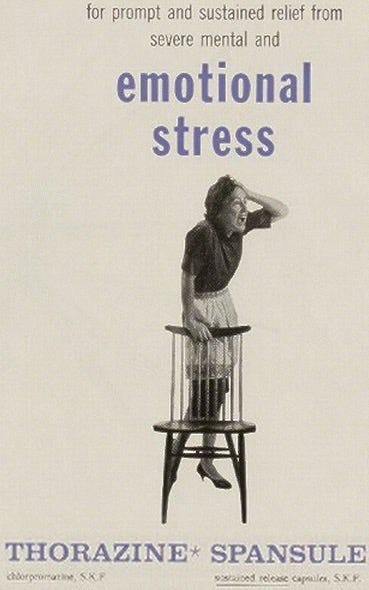
We read the work of Irv and Peter, along with that of critical theorists such as French philosopher Michel Foucault, sociologist Nikolas Rose, and more. Susan Sontag’s canonical Illness as Metaphor informed our activism. Queer theorist David Halperin later recounted how Queer Nation and Act-Up activists carried copies of Foucault’s History of Sexuality,which examined how medical discourse organized and regulated sex. Theory, as it can sometimes do, became our political, intellectual, and personal superpower. It was radical politics, and we were on fire with it! I still am.
In case study after case study, we unflinchingly explored the problems produced by sweeping the farthest corners of ourselves into medical-therapeutic institutions and discourses.
My own early research explored the medicalization of sex. In Disorders of Desire, I showed how sexuality researchers and therapists invented new ways of thinking, talking, and feeling about sex—which produced new forms of regulating the sexual self. New classifications of behaviors and feelings created norms of sexual health and sexual diseases. Sexologists invented new identities—the homosexual, the heterosexual, the lesbian, the transsexual, and many others—thereby producing new forms of normalcy, new types of deviance, and new vectors of inequality. Medicalization was, as philosopher Ian Hacking argues, an engine for making up people, in this case people defined by desire.
Desire itself—one of our deepest forms of yearning—fell under the medical gaze; those acting on too much desire became sex addicts, those not feeling enough desire acquired the newly minted diagnosis, Inhibited Sexual Desire (later revised to Hypoactive Sexual Desire Disorder.) But can medicine really tell us the right amount of desire?
Medicine, therapy, healing, cure. I stopped using metaphors of health, illness, and healing for thinking and talking about myself.

Medicalizing a behavior or feeling may have some advantages: medicine’s cultural authority can confer legitimacy on a problem, attract public attention and resources, potentially reduce stigma (yet also potentially reinforce it), and possibly ease suffering for some individuals. One big segment of the psychedelic reemergence embraces those benefits of medicalization. We see that in the growing influence of the pharmaceutical industry. And in the hope that psychedelics—defined as medicine—will heal challenging feelings newly labelled during the diagnostic revolution of the last half of the twentieth century, such as Major Depressive Disorder, and Post-Traumatic Stress Disorder. (One paradoxical effect of the medicalization of emotional pain is that psychiatric medications can make people feel worse, with some seeking out psychedelics for help withdrawing from them.)
The pace of psychedelic medicalization will likely intensify with recent government directives to expand medical research and potentially reschedule certain psychoactive plants and molecules. The financial incentives for pharmaceutical companies are high. Undoubtedly some individuals will be helped by new treatments. But critics ask, what is the cost of framing so much of what Illouz calls “the modern soul” as pathological?
And there are lots of critics of medicalization’s seemingly inexorable expansion. Over the course of the twentieth century in the U.S., our medicalized culture has created new forms of human nature, new kinds of selves—selves who perceive, and interpret, what happens to us and how we feel through a therapeutic lens. Medical-therapeutic discourses and techniques reach into our deepest interiorities, producing us, as Rose notes, as beings who “act upon our bodies, souls, thoughts, and conduct in order to achieve happiness, wisdom, health, and fulfillment.”
To do this we must constantly strive to heal a self presumed as less than healthy, less than enough. Foucault argued that self-care, expressed in medicalized language such as healing, paradoxically fosters a view of the self as sick. Likewise, in her critique of wellness culture, Colleen Derkatch argues that the very term—wellness—connotes the ever-present danger of “incipient illness,” a self always needing to ward off disease. I would add to these critiques that healing discourse presumes illness, dis-ease, an ambient state of brokenness. Illouz notes that a consequence of therapeutic culture is that “the primary vocation…is to heal.” Healing, meanwhile, is insatiable.
In 1895 Sigmund Freud wrote that the goal of psychoanalysis was to help convert neurotic misery into “ordinary unhappiness.” Arguably, that era has passed. We’re immersed in therapeutic frameworks that redefine the broad spectrum of emotional suffering with a diagnostic vocabulary of depression, anxiety, or trauma. Trauma, in particular, has become a pervasive storyline of contemporary experience. Everyone has experienced trauma, I hear prominent scholars say. One example given: you might not have been picked up as a child when you were crying. In other words, everything can be traumatic. Freud could not have foreseen the shrinking terrain of ordinary unhappiness, nor, perhaps, his own paradoxical role, as a founder of one of what Rose calls “the psy disciplines,” in medicalizing our sadness.

What if we decentered healing language? What non-pathologizing language and concepts might emerge to describe our complicated inner lives, our suffering, our fears and hopes about changing our lives, changing our world? What do we want, wish for, in using psychoactive substances without the idiom of healing?
Some possibilities might include exploration, mystical awakening, self-knowledge, change, awe, strength, untangling knots of suffering. And, perhaps, freedom, both freedom from struggles with pain, and freedom to more fully open to our lives.
Healing discourse—with its emphasis on cure, repair, restoration—deemphasizes the inevitability of ordinary unhappiness, and the significance of life-affirming suffering. It nudges us away from accepting the full spectrum of feelings we might encounter in deep, intentional consciousness change experiences, which can leave us distraught, disappointed, fearful, angry, profoundly sad, and thoroughly destabilized (all of which I’ve felt on my own psychedelic path.)* This messy emotional mix of aliveness bespeaks enchantment. So queer!
Finally, there’s empowerment. Like medicalization, which individualizes disease and suffering, healing leans heavily toward the self. In contrast, the language of empowerment suggests the strength to change not just our own internal lives and community circles. It also evokes the power to recognize, and resist, the broader social systems that benefit from insisting that the sources of our collective suffering are individual and not political.
Resisting healing discourse means swimming against the tide of powerful historical and cultural forces. Yet the beauty—and the work—of searching for complexity and nuance of expression, might, in itself, offer comfort, insight, and solidarity with others.

*Extreme outcomes of psychedelic use aren’t my topic here. See Jules Evans’ Substack letter, “Ecstatic Integration,” for examination of dangerous reactions to psychedelic use, such as psychosis and suicidality.